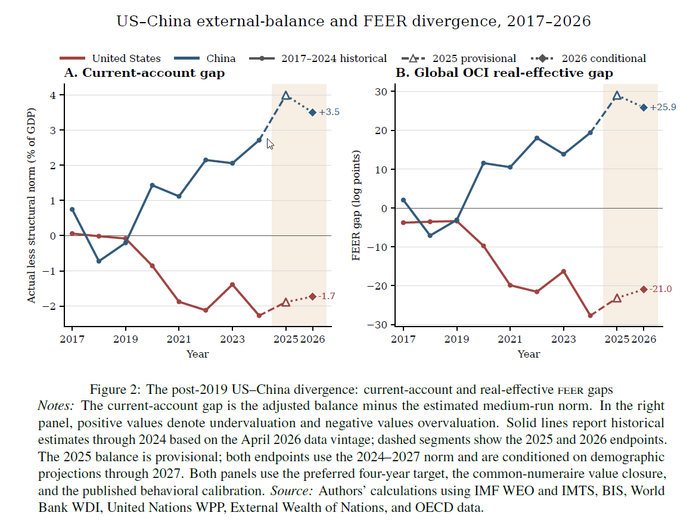
NEW WORKING PAPER: Global current-account imbalances narrowed when the exceptional pandemic and energy-price shocks receded, then widened again in 2024–2025. This paper examines the implications for equilibrium exchange rates with a two-level fundamental equilibrium exchange rate model through 2026. Estimated medium-run current-account norms are combined with a six-bloc world trade system and national euro-area models. The evidence identifies a renewed US–China fault line. In the provisional 2025 estimates, China is undervalued by 26.6 log percentage points in real-effective terms and the United States is overvalued by 24.3; the conditional 2026 gaps remain 23.7 and 22.0, respectively. The direction and approximate magnitude accord with the IMF’s 2025 external assessments. The underlying imbalance reflects weak US public saving alongside high Chinese saving and subdued domestic absorption. Dollar dominance, balance-sheet effects, and geopolitical fragmentation influence the speed and distribution of adjustment. Durable rebalancing calls for credible fiscal consolidation in the United States, consumption-enhancing reform and greater exchange-rate flexibility in China, stronger productive demand elsewhere, and restraint in using tariffs as a current-account instrument.
Latest version: 4 September 2026
You are welcome to download, share, or comment on the following working paper:
- Mazier, J., & Saadaoui, J. (2026). Should We FEER the Return of Global Imbalances? Evidence from a Multilateral Equilibrium Exchange-Rate Model. SSRN. 3 September 2026.