Truly honored to present my latest CAMA Working Paper during an IMF-CEF and EMEA research webinar on Thursday 9 April 2026. Stay tuned for more information.
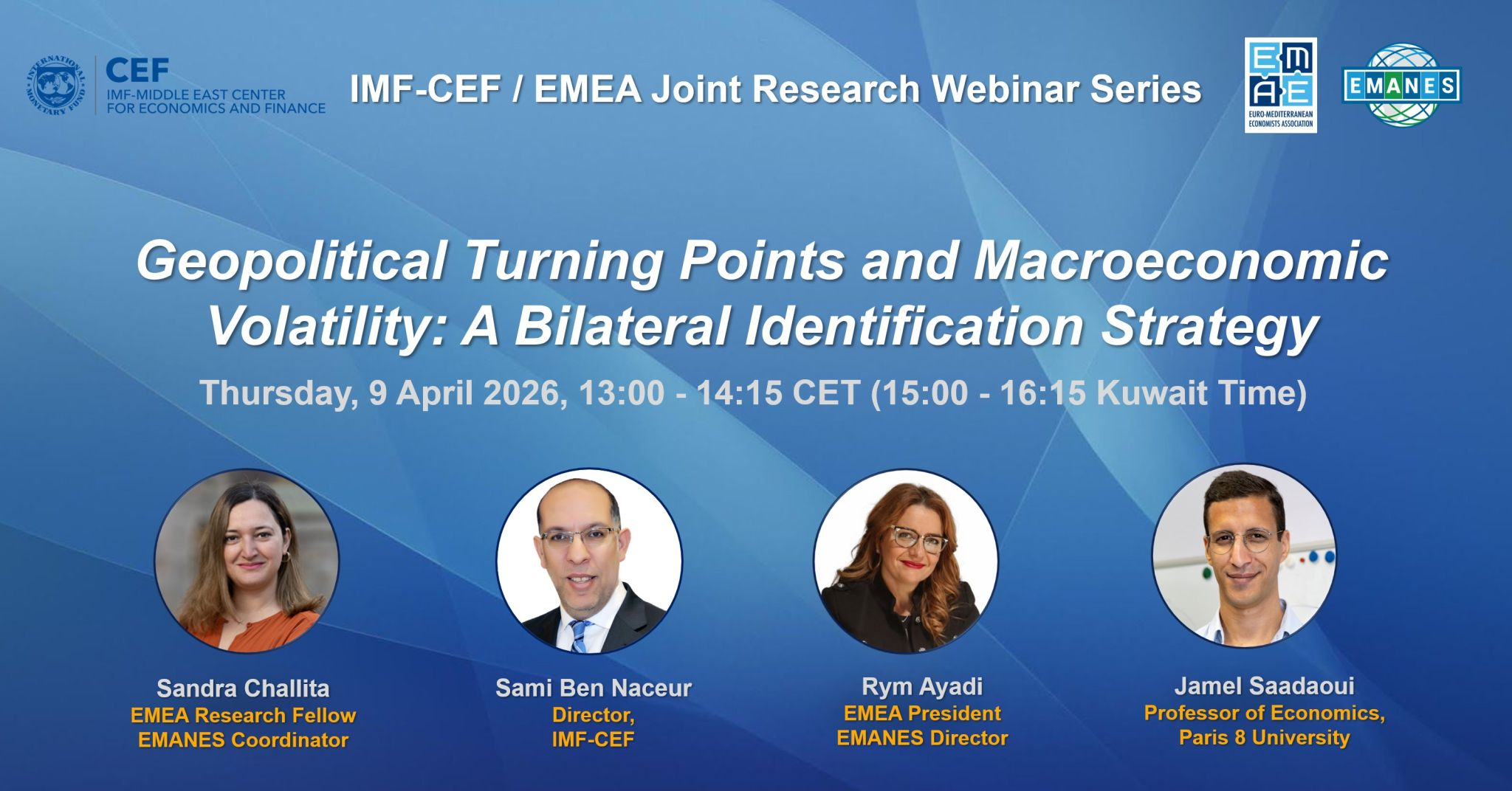
Geopolitical Turning Points and Macroeconomic Volatility: A Bilateral Identification Strategy
This paper constructs a new identification method to quantify bilateral geopolitical shocks—geopolitical turning points—i.e., abrupt, unforeseen state-to-state political turning points. Geopolitical shocks are captured by the second difference of the Political Relationship Index (Δ²PRI), a monthly narrative-based index constructed from Chinese government and media coverage. Unlike conventional global geopolitical risk indicators, Δ²PRI separates sudden departures from bilateral diplomatic paths so causal estimation is possible in a comparative cross-national context. Quantile instrumental variable local projections (IV-LP) are applied in the paper to estimate the dynamic and asymmetric geopolitical shock impact on world oil prices. It is estimated that US–China relational improvements lower oil prices by 0.2% in the short run and increase them by 0.3% in the medium run, with larger effects at the distribution boundaries of oil prices. Replication from Japan–China data establishes external validity. The paper adds a replicable analysis framework to explain how political shocks for dyads with heterogeneous institutional history and strategic rivalry spill over into global economic instability.